
Cafe and Restaurant Fit-Out in Ottawa: The 2026 Owner's Guide
Cafe and restaurant fit-outs in Ottawa run $100 to $400 per square foot in 2026, with timelines of 4 to 9 months from lease signing to opening day. This complete owner's guide covers the 7 stages of a build, costs by space type, permits, Ottawa Public Health requirements and how to avoid the budget blowouts that wreck first-time builds.
Most first-time cafe and restaurant owners in Ottawa don't lose money on rent, ingredients or staff. They lose it during the build. Months of unexpected delays. Budgets that come in 30 to 50 percent over the original number. Plans rejected by Ottawa Public Health because the sink layout was wrong. Hood systems that have to be torn out because they weren't permitted properly. Opening dates that slide twice and then a third time.
None of that is bad luck. It happens because the fit-out process is more complicated than it looks from the outside, and almost nobody walks you through it before you sign the lease. By the time you find out what's really involved, you're already paying rent on an empty space.
Whether you're opening a 600 square foot espresso bar in the Glebe or a 3,000 square foot full-service restaurant in Barrhaven, the playbook is the same.
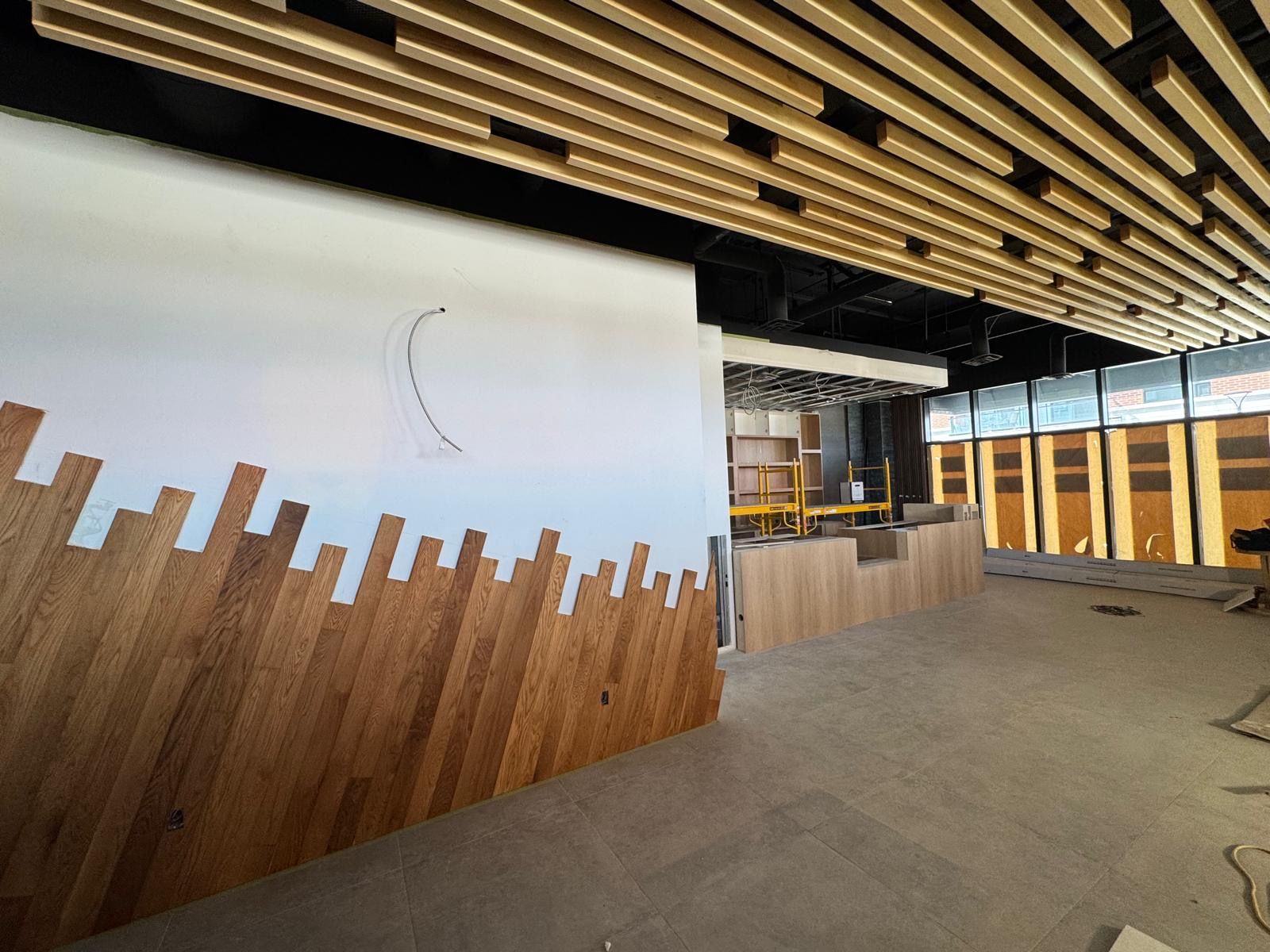
The 7 Stages of a Cafe or Restaurant Fit-Out in Ottawa
Every successful build goes through seven stages in the same order. Skip one, do them out of order or rush through them and the next stage suffers. Here's what each one involves.
Stage 1: Concept Lock-In and Feasibility
This is the work you do before you sign a lease. Your concept (menu, service style, seating capacity, hours of operation) drives every construction decision that follows. You can't design a kitchen until you know your menu. You can't size your electrical service until you know your equipment list. You can't lay out your seating until you know your service style.
Once your concept is locked, you need a feasibility walk of any space you're considering. An experienced contractor walks the unit with you, looks at existing mechanical and electrical capacity, checks ceiling heights, identifies whether the space can support a Type 1 hood exhaust path and tells you roughly what the build will cost. This typically costs you nothing and saves you from signing a lease on a space that's wrong for your concept. A pre-construction feasibility study is the single highest-return hour you'll spend in this entire process.
Stage 2: Lease Negotiation and Tenant Improvement Allowance
Once you've picked a space, you negotiate the lease. The two numbers that matter most are your base rent and your tenant improvement allowance. TI is money the landlord contributes to your build in exchange for a longer lease term. In Ottawa right now, restaurant tenants on five to ten year leases can typically negotiate $20 to $80 per square foot in TI, sometimes more in soft markets.
Don't sign before you know the construction cost. We covered why in 5 Things to Check Before Signing a Commercial Lease in Ottawa, and the TI side of the conversation in Tenant Improvement Allowance in Ottawa. The TI you negotiate at this stage can shift $50,000 to $150,000 of build cost from your pocket to the landlord's. It's the most leveraged hour in the whole project.
Stage 3: Design and Drawings
Now you're designing the space. For most cafes and restaurants in Ottawa, this means hiring an architect or a designer experienced in commercial food service to produce a full set of permit drawings. That includes the floor plan, kitchen layout, equipment list, plumbing layout, electrical layout, mechanical and HVAC, fire protection and accessibility compliance.
Two things to know. First, your menu has to be finalized before this stage, because your equipment list flows from your menu and your kitchen layout flows from your equipment list. Owners who change menus mid-design end up paying for two sets of drawings.
Second, Ottawa Public Health reviews your kitchen and equipment plans before construction. Per Ottawa Public Health's published requirements, three copies of your plans must be submitted, showing every room, food prep area, storage area, service area, washroom and the location of all equipment. They check for things most owners don't think about. Whether your dishwashing sinks are large enough for your largest pot. Whether your hand wash sinks are separate from your prep sinks (they must be, and they can only be used for handwashing). Whether your sink configuration matches the Ontario Food Premises Regulation. These items are easier to fix on paper than after you've built.
Stage 4: Permits and Approvals
In Ottawa, a cafe or restaurant fit-out typically requires the following approvals. Your contractor or designer files them. You should know what they are.
City of Ottawa building permit, filed through the City's online portal. Required for any work affecting structure, plumbing, mechanical or electrical systems. Plan review for a commercial restaurant typically takes 6 to 12 weeks.
Electrical Safety Authority (ESA) permit, filed separately by your licensed electrical contractor. Required for all electrical work and inspected during rough-in and at final.
Ottawa Public Health Food Premises facility plan review. Submitted with your three sets of drawings and reviewed before construction starts. Per Ottawa Public Health, operating a food premises in Ontario falls under Regulation 493/17 of the Health Protection and Promotion Act, and your facility must be inspected by a Public Health Inspector before opening.
City of Ottawa Food Premises Business Licence. Per the City of Ottawa's business permits page, this licence is required to operate. The annual fee is currently $286. Note that the City updated food premises licensing rules in spring 2026, so confirm the current requirements when you apply.
TSSA gas permits, filed by your gas-fitting contractor for any commercial cooking equipment, water heaters or HVAC equipment that runs on natural gas or propane.
AGCO liquor sales licence, if you serve alcohol. Plan on 8 to 12 weeks from application. Everyone on your staff serving alcohol also needs a Smart Serve certificate, which is online and takes a few hours.
Signage permits, separate from your building permit, required for permanent exterior signs.
We broke the broader permit picture down in What Permits Do You Need for a Commercial Fit-Up in Ottawa. For restaurants specifically, the Ottawa Public Health review is the one most owners underestimate.
Stage 5: Construction
Once permits are in hand, construction starts. A typical Ottawa cafe build runs 8 to 12 weeks of on-site construction. A full restaurant with a commercial kitchen runs 10 to 16 weeks. The sequence usually goes demolition, framing, mechanical and electrical rough-in (plumbing, HVAC ducting, electrical wiring and gas lines), inspections at rough-in stage, insulation and drywall, flooring, fixtures and millwork, equipment installation, final mechanical and electrical connections, paint and finish work, then final inspections.
The two things that slow down construction in this stage are change orders and inspection failures. Change orders happen when you decide to move a wall or add an outlet after rough-in. Each one costs you days. Inspection failures happen when something wasn't built to code and has to be reworked. Both are preventable with good drawings and an experienced contractor.
For a deeper look at how long each step actually takes, read How Long Does a Commercial Fit-Out Take in Ottawa.
Stage 6: Equipment Installation and Commissioning
Your commercial kitchen equipment, walk-in cooler, refrigeration, hood and ventilation system, ice machine, espresso machine, dish system and front-of-house furniture all get installed in this stage. The order matters. Some equipment has to be in place before drywall closes (anything that gets ducted, vented or hard-piped). Other equipment comes in at the end (movable refrigeration, espresso bars, furniture).
A common mistake is ordering equipment too late. Commercial restaurant equipment often has 6 to 12 week lead times, and certain specialty items can stretch to 20 weeks. If you wait until construction starts to place orders, you'll be sitting in a finished space waiting for a hood to arrive. Order early and stage delivery to your construction schedule.
Commissioning is the testing phase. You turn on the gas, fire up the hood and confirm exhaust pull rates, test the hot water capacity, run the dish machine, balance the HVAC and confirm every piece of equipment works to spec. This is also when you train your opening team on the kitchen.
Stage 7: Final Inspections and Opening
The final stretch. You get final inspections from the City of Ottawa building inspector, ESA, the gas inspector if applicable and the Ottawa Public Health Inspector. Per Ottawa Public Health's guidance, you should contact them two weeks before your target opening date to schedule the pre-opening inspection.
A good contractor does a pre-inspection walkthrough before the actual inspectors arrive, catches the small items that would fail (a missing label on a panel, a sink mounted half an inch off spec, a fire extinguisher in the wrong place) and fixes them. Plan on one to three weeks between substantial completion and opening day, allowing time for inspection scheduling, any punch list items and your soft opening or staff training.
Cafe vs Restaurant: What's Actually Different in the Build-Out
The seven stages above are the same for both. The detail inside each stage is where cafe and restaurant builds diverge.
Hood and exhaust. A cafe with espresso and pastries usually only needs a Type 2 hood (for heat and moisture from dishwashers and similar appliances) or sometimes no commercial hood at all. A restaurant with cooking on a flat top, fryer, charbroiler or wok needs a Type 1 hood with a UL 300 fire suppression system, designed and installed to NFPA 96. The difference in cost is meaningful. Type 1 hoods with full duct runs and makeup air can run $40,000 to $120,000 installed.
Grease interceptor. Most cafes don't need one. Any restaurant with a fryer, dishwasher or significant food prep does. Grease interceptors must be sized to your fixture load and meet City of Ottawa wastewater bylaws. Installation is $5,000 to $25,000 depending on size and whether it goes inside or outside.
Electrical service. A coffee-and-pastry cafe can usually run on 200-amp service with no upgrade. A restaurant with a full kitchen, walk-in cooler, hood and HVAC almost always needs 400-amp or higher. Upgrading to 400-amp service in an existing building can run $30,000 to $80,000.
Plumbing. A cafe typically needs hand sinks, a three-compartment sink (if washing reusable cups and plates) and a mop sink. A restaurant adds prep sinks, multiple hand wash sinks distributed through the kitchen, the grease interceptor connection, bar sinks if applicable and floor drains throughout the kitchen.
Floor space allocation. Cafes are typically 70/30 front to back. Restaurants are typically 60/40 dining to kitchen. If you're building a restaurant in a small footprint, the math gets tight quickly. Most owners underestimate how much square footage their kitchen actually needs.
Finish materials. Both need non-porous, slip-resistant flooring (epoxy or commercial tile) in the kitchen, FRP or stainless steel on the lower walls and washable paint everywhere else. Restaurants need more of all of it.
For a cost-focused breakdown of restaurant builds specifically, read How Much Does a Restaurant Fit-Up Cost in Ottawa in 2026.
Ottawa-Specific Requirements Most Owners Underestimate
A few items in Ottawa that catch first-time owners off guard.
Two regulators, not one. Your build has to satisfy both the City of Ottawa (building, electrical, plumbing, mechanical, life safety) and Ottawa Public Health (food safety, kitchen layout, sink configuration, materials). They review separately and inspect separately. You can pass the City inspection and fail Ottawa Public Health on the same day. Your contractor needs to design for both from the start.
Hand wash sinks have rules. Per Ottawa Public Health, hand wash sinks must be a separate unit, not a multi-purpose sink. They can only be used for hand washing. They have to be conveniently located in food prep areas. Bar areas may need their own. This is the single most common Public Health revision item we see on submitted plans.
Three-compartment sink or commercial dishwasher. If you're using multi-service dishes (washable plates, cups, cutlery), you need a three-compartment sink or a commercial dishwasher. Two-compartment sinks are only allowed for premises using single-service items (takeout-only). Plan for the right one based on your service model.
Open ceilings have conditions. That exposed-pipe industrial cafe look is popular, but Ottawa Public Health doesn't recommend open ceilings with exposed vents and piping in kitchen areas. If you want the look in your dining room, all pipes and vents have to be painted and you need a documented cleaning plan.
Lighting and finish requirements. Light fixtures over food prep and storage areas must be shatterproof or have shatter-protection covers. Floors must be non-porous and slip-resistant. Walls in food prep areas must be smooth, non-absorbent and easy to clean.
The 2026 licensing update. The City of Ottawa updated its food premises licensing framework in spring 2026, introducing new categories including expanded activity food premises and changes to home-based food businesses. If you're applying now, confirm the current category and licence fee with the City. Most full-service cafes and restaurants fall under the standard food premise category.
Realistic Budget and Timeline for an Ottawa Cafe or Restaurant Fit-Out
Here's where the numbers actually land in 2026.
Cafe fit-out (espresso, pastries, light food prep): $100 to $250 per square foot. A 1,000 square foot cafe lands between $100,000 and $250,000 for construction alone. Add 30 to 50 percent for equipment, furniture, signage and pre-opening costs.
Quick-service or fast-casual restaurant (counter service, limited menu): $150 to $300 per square foot. A 1,500 square foot location typically runs $225,000 to $450,000 for the build.
Full-service restaurant (table service, full kitchen, often a bar): $200 to $400+ per square foot. A 3,000 square foot location lands between $600,000 and $1.2 million for the build alone.
Total timeline from lease signing to opening day: 4 to 6 months for a cafe. 6 to 9 months for a full-service restaurant. Permit review and equipment lead times are the two variables that swing this number.
The single biggest cost driver is the condition of the existing space. A second-generation restaurant space (the previous tenant was also a restaurant) can save you 30 to 50 percent compared to a cold shell or a former retail space. Existing infrastructure (hood, grease trap, exhaust path, electrical service, gas lines) carries forward if it's still in good shape and meets code.
Frequently Asked Questions
How much does it cost to open a cafe in Ottawa?
A cafe fit-out in Ottawa typically costs $100 to $250 per square foot for construction in 2026. A 1,000 square foot cafe lands between $100,000 and $250,000 just for the build, with equipment, furniture and pre-opening costs adding another 30 to 50 percent. Total budget for a typical neighbourhood cafe in Ottawa, including working capital, lands between $200,000 and $400,000.
How much does it cost to open a restaurant in Ottawa?
Restaurant fit-outs in Ottawa run $150 to $400 per square foot in 2026 depending on kitchen complexity, finish level and the condition of the existing space. Total project cost for a full-service restaurant typically lands between $400,000 and $1.5 million, including build, equipment, furniture, licences and working capital.
How long does a cafe or restaurant fit-out take in Ottawa?
Plan on 4 to 6 months from lease signing to opening day for a cafe. Plan on 6 to 9 months for a full-service restaurant. The permit review alone takes 6 to 12 weeks for a commercial restaurant in Ottawa, and equipment lead times can stretch construction further. Build in margin.
Do I need Ottawa Public Health approval before I start construction?
Yes. Per Ottawa Public Health, three copies of your facility plans (showing food prep, storage, service, washrooms and all equipment locations) must be submitted and approved by a Public Health Inspector before construction begins. Skipping this step risks expensive rework if the layout doesn't comply with Ontario Regulation 493/17.
What's the difference between a cafe and a restaurant for permitting?
For City of Ottawa permits, both fall under commercial construction and require building, electrical, plumbing and mechanical permits. For Ottawa Public Health, both require Food Premises facility plan approval and inspection. The difference is in the specific kitchen requirements. A restaurant with cooking equipment that produces grease-laden vapors triggers Type 1 hood requirements, NFPA 96 compliance and usually a grease interceptor. A cafe with espresso and pastries typically does not.
Do I need a separate sink just for handwashing?
Yes. Per Ottawa Public Health, hand wash sinks must be a separate, dedicated unit located conveniently in food prep areas, and they can only be used for handwashing. Bar areas and wait stations may also require their own dedicated hand sinks. This is one of the most common Public Health revision items on submitted plans.
Can I open a takeout-only cafe with a smaller sink setup?
If you're using single-service items (disposable cups, plates and utensils) and not washing any reusable dishware, Ottawa Public Health allows a two-compartment sink instead of a three-compartment sink. Confirm with your assigned inspector during plan review.
What's the most common reason restaurant fit-outs go over budget in Ottawa?
Three reasons in order. Signing a lease before knowing the construction cost. Mid-design menu changes that trigger redesign of the kitchen and equipment list. Discovering mechanical or electrical capacity issues in older buildings after construction has started. All three are preventable with a proper pre-construction feasibility study.
Ready to Start Your Build?
A successful cafe or restaurant in Ottawa starts with a build that's on time, on budget and inspection-ready on opening day. That doesn't happen by accident. It happens because the process runs in the right order, the drawings are right the first time, Ottawa Public Health is on board before construction starts and the contractor has actually built restaurants and cafes in this city before.
That's what we do. We've built cafes, restaurants and food service spaces across Ottawa, Kanata, Orleans, Barrhaven and Eastern Ontario. We walk your space before you sign anything, give you a real construction number, manage the full permit process including Ottawa Public Health and run the build from demo to opening day so you can focus on hiring, training and getting ready to serve.
If you're planning a cafe or restaurant in Ottawa, book a no-cost site walk-through. We'll review the space, flag any issues and give you a realistic budget and timeline before you commit to a lease.
Learn more about our cafe and restaurant fit-up service and our feasibility and pre-construction process.