
Opening a Restaurant in Ottawa: Licences, Permits and Approvals in 2026
What licences and permits do you need to open a restaurant in Ottawa? Five for almost every new restaurant: a City of Ottawa building permit, an Ottawa Public Health approval, an electrical inspection of any electrical work, compliance with the fire code and a City food premises business licence. Serving alcohol adds a liquor sales licence from the Alcohol and Gaming Commission of Ontario, which needs three more letters from the City. A new exterior sign and a patio usually need their own permits.
None of them is hard on its own. The order is what catches people. Several approvals depend on another one being finished first, and the last ones cannot happen until the room is built and furnished.
This post covers each approval, who issues it, what it costs where the fee is published and when to apply. For the construction itself, see our Cafe and Restaurant Fit-Out in Ottawa owner's guide.
Which licences and permits does a restaurant in Ottawa need, and who issues each one?
| Approval | Issued by | Published fee |
| Building permit for the fit-up | City of Ottawa Building Code Services | $12.75 per $1,000 of assessed valuation, minimum $117.00 |
| Change of use permit, where the use changes with no construction | City of Ottawa Building Code Services | $126 per application |
| Food premises plan review and health approval | Ottawa Public Health | None published |
| Electrical notification and inspection | Electrical Safety Authority | From $92 for a commercial notification |
| Gas work | A contractor registered with the Technical Standards and Safety Authority | Set by the contractor |
| Food premises business licence | City of Ottawa | $298 a year |
| Liquor sales licence | Alcohol and Gaming Commission of Ontario | $1,055 for two years, $1,355 for four |
| Agency letters of approval for the liquor licence | City of Ottawa: Building Code Services, Ottawa Fire Services and Ottawa Public Health | $513 plus HST for Building Code Services. Separate fees may apply for the others |
| Permanent sign permit | City of Ottawa | A fee applies, confirm with the City |
Fee sources: the City's Building Code Services Fee Schedule effective January 1, 2026, the City's food premises licence page , the Electrical Safety Authority's 2026 commercial fee guide and the liquor regulator's liquor licensing fees page.
Do you need a building permit to open a restaurant in an existing commercial unit in Ottawa?
Yes, for any construction, and often even when you build nothing. Ontario's Building Code Act says no one may change the use of a building, even with no construction, if the change increases the hazard, unless a permit has been issued.
The City of Ottawa states it plainly in its guide for licensed establishments: where the existing use of a suite is changing to an assembly occupancy, a building permit or change of use permit is required before work takes place. A restaurant is an assembly occupancy. A former office or shop is not. So turning a retail unit into a restaurant needs a permit before anything else happens. If you are building, the building permit covers it. If you are not, the City's fee schedule lists a change of use permit at $126 per application.
On a $200,000 fit-up the building permit lands near $2,550. The list of construction permits and what each covers is in What Permits Do You Need for a Commercial Fit-Up in Ottawa?
Why does the 30 seat mark matter when you plan a restaurant in Ontario?
Because two separate rules sit there. The Ontario Building Code lets a restaurant designed for not more than 30 people consuming food or drink be classified as a mercantile occupancy instead of an assembly occupancy. And the City of Ottawa says that with 30 seats or more, a completed fire safety plan is required before the fire inspection for a liquor licence will pass.
Note the difference. The Building Code counts people consuming food or drink. The City's fire rule counts seats. A 30 seat room can land on either side depending on how it is designed.
Do not read the Building Code rule as a loophole for small restaurants. The Ontario Building Officials Association's guidance is that the technical requirements still come from the same part of the code and that professional design and review apply to restaurants of any size. Ask your designer how your seat count affects the classification before the layout is fixed.
How is the seating capacity of an Ottawa restaurant calculated?
By two calculations, and the lower number wins. Ottawa Fire Services explains that you work out an occupant load from the floor area and another from the width of the exits, then use whichever is smaller.
For the floor area calculation, dining, alcoholic beverage and cafeteria space is counted at 1.10 square metres per person. So 110 square metres of dining room supports up to 100 people by area, before the exits and the washrooms are checked.
That number then drives four things in the Ontario Building Code.
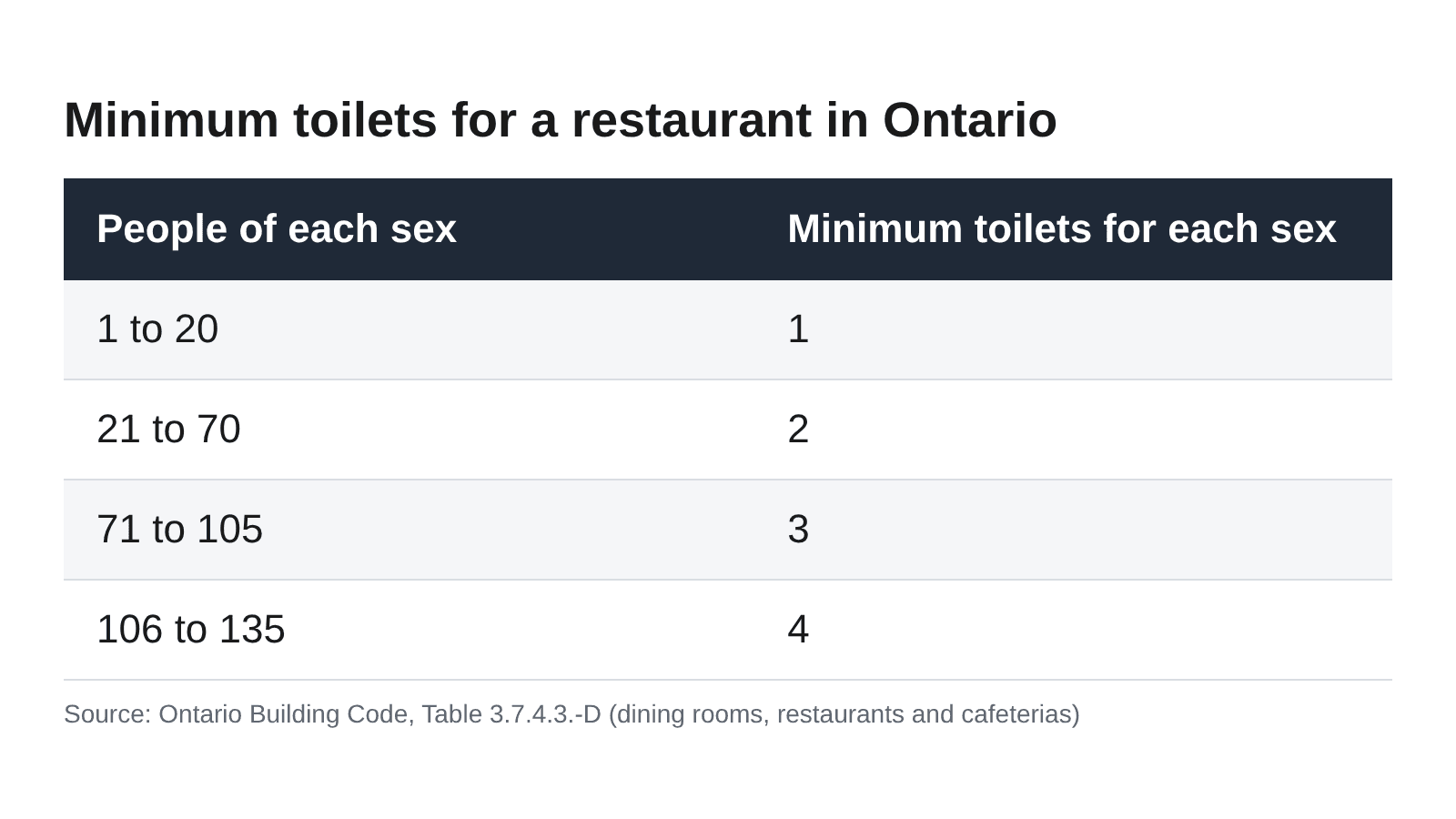
Washrooms. The code has its own table for dining rooms, restaurants and cafeterias, counted by the number of people of each sex:
Staff washrooms. A restaurant with more than 40 seats needs separate washroom facilities for employees, in addition to the ones for customers. At 40 seats or fewer, staff may share the customer washrooms.
Exits. A room intended for more than 60 people needs at least two exit doorways, placed apart from each other. A smaller room can need two as well, depending on its floor area and the travel distance to the door.
Fire alarm. In a building that is not sprinklered throughout, a licensed restaurant with an occupant load of more than 150 needs a fire alarm system. A building with a sprinkler system generally needs one in any case.
Two more rules sit outside the Building Code. Under the Ontario Fire Code, an occupant load of more than 60 people has to be posted in a conspicuous location. And if you serve alcohol, the capacity on your liquor licence comes from this same number and includes staff as well as customers.
Ottawa Fire Services does not do the calculation for you. Its page says to contact a qualified architect or engineer. Your designer applies these tables to your actual layout, and the building official checks them on site.
Settle the seat count early. Going from 40 seats to 44 adds a staff washroom.
What does Ottawa Public Health need before a restaurant opens?
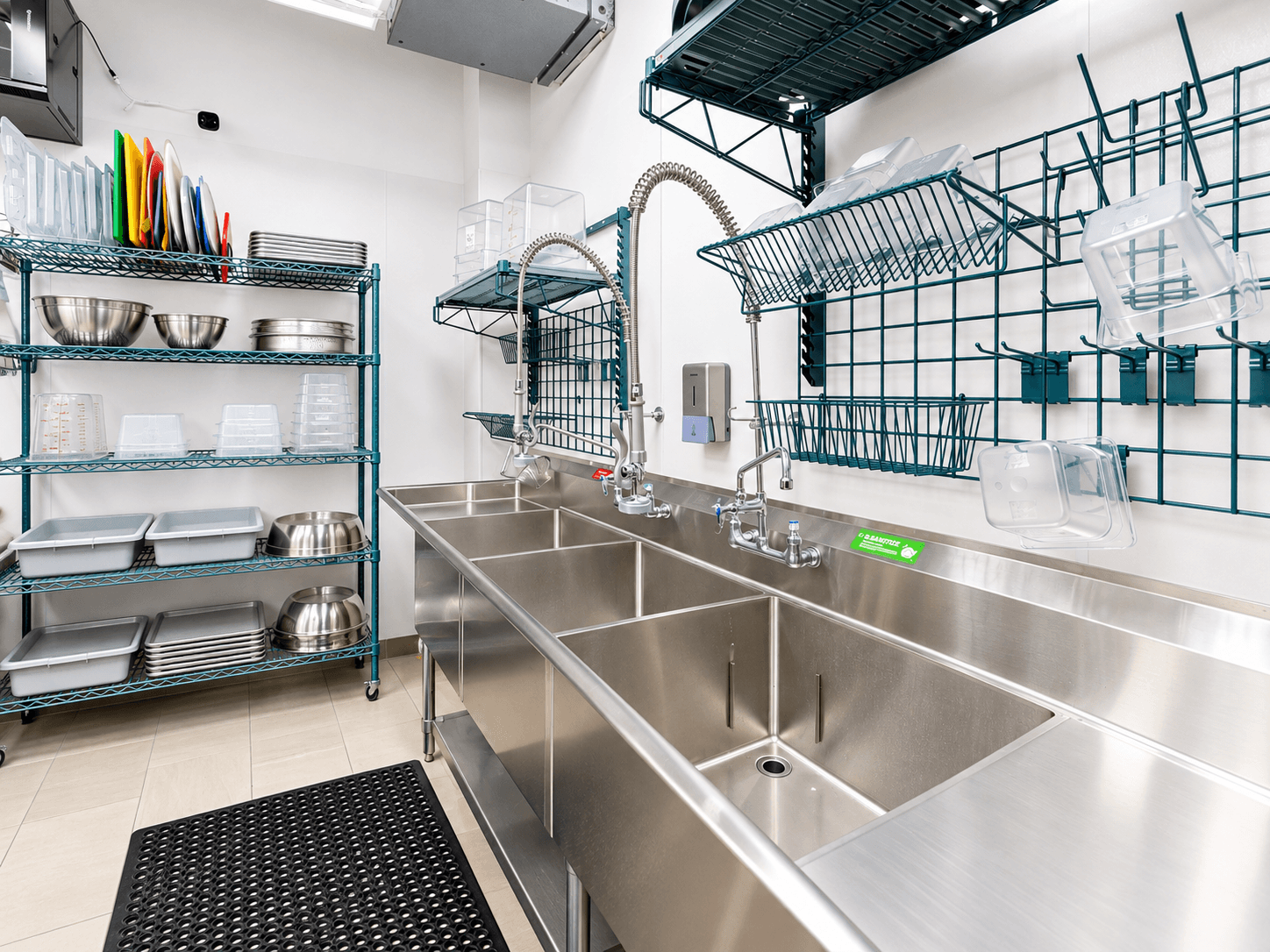
Notice, a plan and an approval. Ottawa Public Health says owners or operators must notify it at least 14 days before opening a food premises, and that public health approval is required before opening.
Its Starting a Food Premises page lists what goes in the application:
- A floor and equipment plan, to scale. Hand drawn is accepted.
- A brief description of the operation.
- A sample menu.
- Proof of food handler certification.
Send the plan before construction starts, not 14 days before opening. Fourteen days is the minimum notice. A sink in the wrong place is cheap to move on paper and expensive to move after the plumbing is in. What the inspector looks for in the layout is covered in our owner's guide.
Two rules from Ontario's Food Premises Regulation, O. Reg. 493/17, are worth knowing now. There must be at least one food handler or supervisor on the premises who has completed food handler training during every hour the restaurant is operating. And once you are open, you cannot alter the floor space or the number of toilets or washbasins in a washroom without written approval from a public health inspector.
How do you get a food premises business licence in Ottawa?
You apply to the City through the Food Premises Application tool on My ServiceOttawa. The City's food premises licence page says a food premises licence is required for any business that prepares food, costs $298 annually and expires each year on March 31.
The City lists these requirements:
- The applicant is 18 years of age.
- The business opening date is within four to six weeks of the application date.
- The building complies with zoning, building code, public health, fire code and property standards requirements.
- The business has $2 million in commercial general liability insurance.
- Proof has to be a valid certificate, not a quotation or a binder.
- Proof of ownership or lease, plus articles of incorporation if incorporated.
The City gives an approximate timeline of 3 weeks and warns it may be longer. Because the building has to comply first, this licence comes at the end of the build, not the start.
Two recent changes. Since May 31, 2026, a restaurant that offers live music, live performance or dancing needs an expanded activity food premises licence, which replaced the old pairing of a food premises licence and an amusement place licence. And the City's new Licensing By-law takes effect January 1, 2027. The City says it makes no changes to the licensing requirements for food premises.
What do you need to apply for a liquor licence for a restaurant in Ottawa?
An application to the Alcohol and Gaming Commission of Ontario, a form signed by the City Clerk and three compliance letters from the City. The regulator's Apply for a liquor sales licence page sets out the steps.
Before applying, the regulator tells you to verify the zoning with your municipality and verify your tax compliance with the Ministry of Finance. The application itself needs:
- Entity and personal disclosure forms and a signature form.
- Floor plans, to scale with dimensions.
- Your business name registration, where one is required.
Then the municipal pieces, which can follow the application:
- A Municipal Information Form, signed and dated by the municipal clerk's office.
- Three agency letters of approval, from the building department, the fire department and the public health department. Each has to say the premises meets the standards that agency administers. The building or fire letter states the occupant load for the licensed area.
The fee is $1,055 for a two-year term or $1,355 for a four-year term. If your application needs public notice, the regulator tells you and emails a poster to hang at the location. It inspects the premises before issuing the licence. It does not publish a processing time, so apply early. The regulator's own advice is to submit the municipal documents as soon as possible.
Staff matter too. The regulator says valid certification from an approved training program is legally required for every person involved in the sale, service or delivery of liquor. In Ontario that program is Smart Serve.
How do the City of Ottawa agency letters of approval for a liquor licence work?
You apply for them through My ServiceOttawa, and the City sends inspectors from three services. The City's Agency Letter of Approval and Municipal Information Form page says the application needs a floor plan drawn to scale and occupant load calculations, plus a site plan if outdoor space is included.
What each service checks, from the City's pages:
- Building Code Services confirms the layout matches the plan, checks the occupant load against the washrooms and the exits and verifies the zoning. The City asks for a minimum of 10 business days. The 2026 fee is $513 plus HST.
- Ottawa Fire Services inspects the finished room. The City asks for a minimum of 10 business days, and says the premises must be ready to open, with chairs and tables in place, before the inspection.
- Ottawa Public Health inspects and signs the form on site.
The part that surprises owners: the City will not issue the letter until all outstanding building permits are closed and the final inspection has passed. An open permit from a previous tenant can hold up your liquor licence. Check for open permits on the unit before you sign the lease.
Do you need a permit for a restaurant sign or a patio in Ottawa?
Usually yes for both. Permanent signs are governed by the City's Permanent Signs on Private Property By-law, No. 2016-326, and the City says you may have to apply for a permit before installing one. Different zones allow different signs, so check before you order the sign, not after.
A patio is its own process, with its own permit and its own liquor licence step. We cover it in Patio Permit Ottawa: How to Add Outdoor Seating to a Cafe or Restaurant in 2026.
Who inspects the electrical, gas and kitchen exhaust work in an Ottawa restaurant?
Three different bodies, none of them the City's building inspector.
- Electrical. Almost all electrical work has to be reported to the Electrical Safety Authority. Your licensed electrical contractor files the notification and requests the inspection, and the work is inspected before it is covered.
- Gas. Gas work is done by a contractor registered with the Technical Standards and Safety Authority. Registered contractors are responsible for using properly certified people for the work.
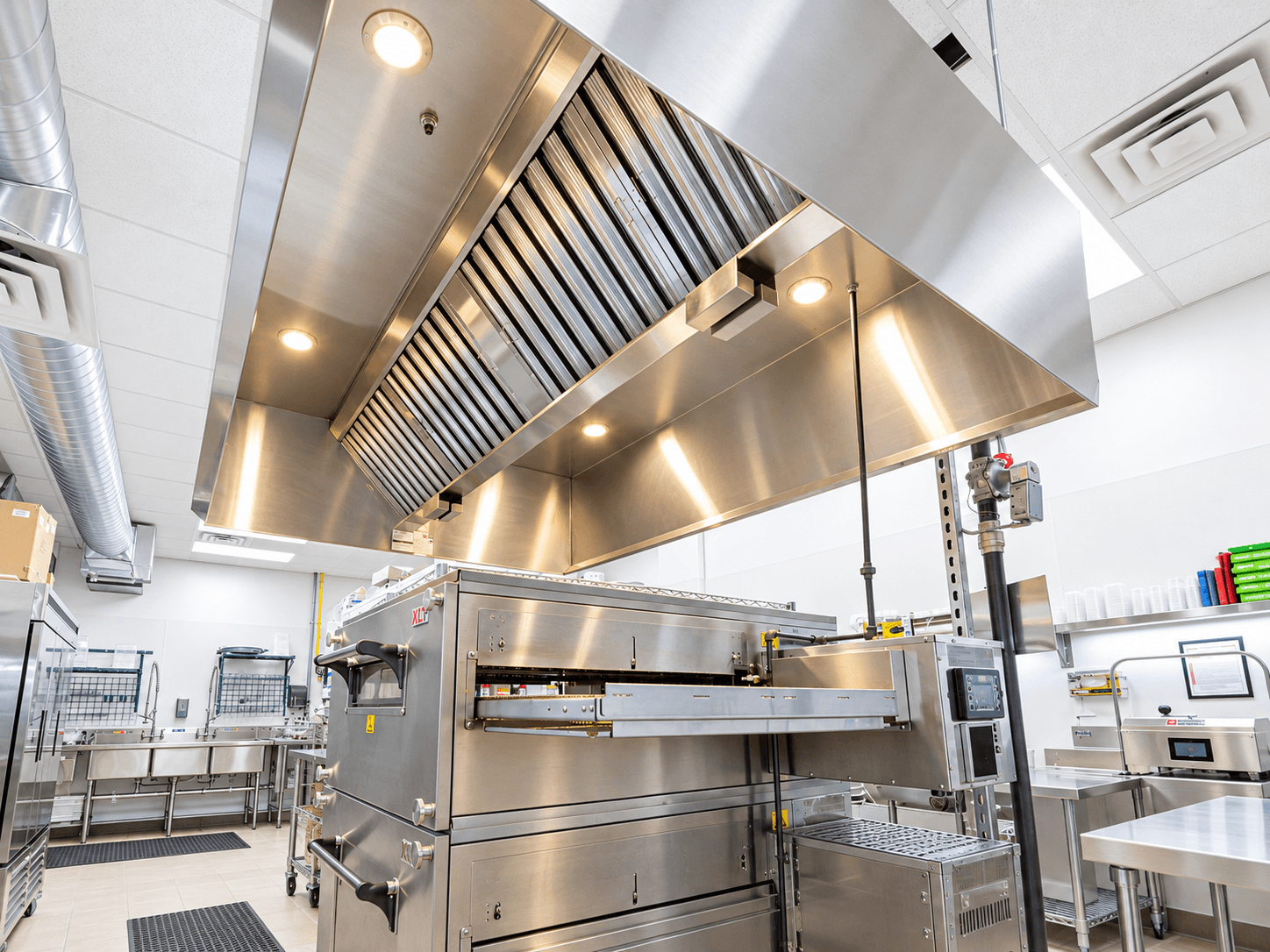
- Kitchen exhaust. The Ontario Fire Code requires any cooking operation that produces smoke or grease-laden vapours to have an exhaust system and a fire protection system that meet the NFPA 96 standard. Ottawa Fire Services is the authority. See Type 1 vs Type 2 Hood for which hood your menu needs.
In what order should you apply for restaurant licences and permits in Ottawa?
Start with the ones that take longest and the ones other approvals wait on. This order follows from the lead times and dependencies above.
| When | What to do |
| Before signing the lease | Confirm zoning, check for open building permits on the unit, settle your seat count |
| During design | Send the kitchen plan to Ottawa Public Health, start the liquor licence application |
| When drawings are done | Apply for the building permit and for the sign permit if you need one |
| During construction | Electrical, gas and building inspections at each stage |
| Four to six weeks before opening | Apply for the food premises business licenc |
| As the room nears completion | Apply for the three agency letters. The City needs a minimum of 10 business days each for the building and fire reviews |
| At least 14 days before opening | Give Ottawa Public Health notice of opening |
| Room finished and furnished | Final building inspection and Ottawa Public Health approval, plus the fire inspection if you are applying for a liquor licence |
One free resource most owners miss. The City of Ottawa runs a Business Ambassador Service for Food Establishments. A Business Information Officer acts as your single point of contact for the City's licences and permits. The contact is [email protected] or 613-580-2745.
Frequently asked questions
1. How much is a food premises licence in Ottawa in 2026? $298 a year. It expires every March 31, whenever you bought it.
2. How much does a liquor licence cost for a restaurant in Ontario? A new liquor sales licence costs $1,055 for a two-year term or $1,355 for a four-year term. Applications exempt from public notice cost $925 or $1,225.
3. How long does it take to get a food premises licence in Ottawa? The City gives an approximate timeline of 3 weeks and says it may be longer. You can apply once your opening date is within four to six weeks.
4. Do you need a change of use permit to turn a retail store into a restaurant in Ottawa? Yes. The City requires a building permit or a change of use permit before work starts when a suite changes to an assembly occupancy. A change of use permit on its own is $126 per application.
5. Can you take over an existing restaurant in Ottawa without new permits? Not without checking. The City charges a $54 ownership transfer fee on a business licence, Ottawa Public Health requires notice before a food premises opens, the liquor regulator charges $1,000 for a licence transfer application and any construction needs a building permit. Check for open permits left by the last tenant.
6. Does every restaurant worker in Ontario need a food handler certificate? No. The regulation requires at least one trained food handler or supervisor on the premises during every hour of operation. Ottawa Public Health asks for proof of certification with your application.
Opening a restaurant in Ottawa and want the build and the approvals lined up?
Noblestar Construction is a commercial general contractor building cafe and restaurant fit-outs in Ottawa. Bring the address and your seat count before you sign the lease, so the approvals above are planned into the build from day one. See our cafe and restaurant fit-out service or call 613-790-6128.